The Killer Wore Leather – Laura Antoniou

killerworeleather

New York is hosting its annual Mr. and Ms. Global Leather (and Bootblack) competition. Kinksters from all American states have streamed in for a three day weekend of workshops, competitions and play. The previous winners, Mack Steel and Mistress Ravenfyre, gather with the panel of judges to begin the three-day-long weekend of kink. All of them loathe each other, from the Neanderthalic adherents to a Gorean—sorry, Zodian fantasy universe, to the elderly lesbian professor of sociology (with honours in acidic social commentary). All in all, a normal Mr. And Ms. Global Leather, et al, competition.

And then the penultimate bad boy of leather, Mack Steel, is discovered dead in his hotel room. Wearing nothing but a pair of frilly yellow panties.

How do you find a killer, when everyone who knew the man hated him? How do you even select your suspects?


Enter single, lesbian, Detective Rebecca Feldblum, assigned to case by a boss that tells her, ‘They’re your people, right?’, and also assigned an ultra-conservative partner from the deep South…

Nothing could make things worse. Except perhaps that all the suspects will be leaving in three days, and discovering that her very-ex-girlfriend is also attending Mr. And Ms. Global Leather…


Amusing. A tongue in cheek, merry observation of the politics and personalities of small societies wrapped up in an interesting and well-paced whodunnit. The setting of a kinky social gathering is clever and novel. Crossing my fingers for a sequel, this is a light read, with an interesting subject matter.


K.L gives The Killer Wore Leather 4 out of 5 spanks with a Zodian slave goad.


SPOILER ALERT! DANGEROUS WORDS AHEAD!


Sadly, the eventual killer was a little easy to pick. But I’m just cynical like that.


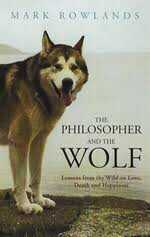
The Philosopher and the Wolf – Mark Rowlands

Philosopher and the Wolf

This read was inspired by hearing the podcast ‘Mark Rowlands on Philosophy and Running’, from Philosophy Bites, quite possibly my all-time favourite podcast.

A young philosophy professor, Rowlands buys a wolf pup while on Spring break, and his life changes forever. It is, self-admittedly, a kind of selective autobiography of life with a wolf, seen through the lenses of philosophy.


A self-proclaimed misanthropist and then-alcoholic, Rowlands delves into evolutionary psychology to philosophize on the development of human intelligence from a sort of arms’ race of deceitfulness. Vegetarianism and the ethics of animal treatment is examined, à la Singer; as a result, the wolf Brennin, and his eventual companions Nina and Tess are converted to piscatarianism. Rowlands addresses the issues of potential cruelty in keeping a wolf as a pet, and explores our prima facie concepts of nature, red in tooth and claw, and the nature of humanity today, stuck with a brain the architecture of which is a sometimes-archaic product of evolution. In the Autumn years of Brennin’s life, he examines his own understanding of happiness; humans being “animals that worship feelings.” The legend Sisyphus, cursed by the gods to forever push a boulder up a hill, only to see it roll back down, is depicted as an existential allegory for human futility both within an individual’s life (getting up each day, going to work, going home) and throughout the history of humanity. We each give our children the same boulders to push up the hill as we were handed by our parents, which opens an invitation to question the validity of a goal-oriented existence.


It is primarily a book about philosophy. The vignettes of life with Brennin serve to give the philosophical discussions shape and direction, but are not the focus. Those sections which do recount life with Brennin reminded me a little of the Lyn Hancock autobiography There’s a Seal in My Sleeping Bag, and were at times surprising, but largely enjoyable.


All very well, and very interesting – but does the book gradually gather its arguments and twist them together to form a point? Yes. And yes again. The discussion of humans as Sisyphean happiness junkies leads onto that timeless question: what is the meaning of life?

Rowlands argues that it is a question which we are far too fixated upon finding and achieving an answer to, because there is no inherent meaning to existence. There is nothing we can possess, achieve or become for any significant length of time, that will fill the hole inside of us. Unlike the wolf of his narrative, we are temporal creatures, and often more concerned with possessing and achieving.

Rowlands interprets the real meaning of existence as being, rather than possessing. To be a certain type of intelligent ape, because “[t]he meaning of life is to be found precisely in those things that temporal creatures cannot possess: moments.” Important moments. Our best moments. These are not the most enjoyable or pleasurable moments; they can be the most unpleasant times, the darkest hours of our lives.

“Our highest moments are when we are at our best. And often it takes something truly horrible for us to be so…We are at our best when there is no point in going on; when there is no hope for which to go on.”


Rowlands’ stressing the moments of experience – good and bad – over achievements or possessions, is one of the most sensible I have encountered for a while, if potentially discomforting. Personally, I have no belief in a higher meaning to life.

You may wrap it up in blessed yellow scarves, or support it with mitres, or wreath it in cigarette smoke and burns, but life – and its defining moments – are reducible down to what you experienced, and what you did when it was hardest to go on. Moments in time – memories – are the most important thing I possess. And I agree with Rowlands – they aren’t always good ones.

They are memories of three days hiking in the rain as a kid, the weather so cold that my little sister went hypothermic, mist wreathing the trees, and a desiccated dead thing hanging from a tree like a horror movie prop. The decaying hut we found was full of rat droppings, and we couldn’t get dry. We were tired and cold. It was a fantastic hike; we all still remember it.

It’s breaking my elbow falling off a near-stationary skateboard, the parents making a six-hour round trip to drive me back to me home. Being too ashamed to meet their eyes when they arrived, and heartbroken that I wouldn’t be able to climb for six weeks, mere days after my first multi-pitch. Knowing how much fitness I would lose while recovering. A week later I was climbing and bouldering one-handed anyway, because: fuck it, the worst had already happened. I think climbing one-handed actually improved my balance, eventually; it definitely maintained my sanity.

I value the points at which I get up and keep trudging. It doesn’t matter that I’m not happy in that moment. It’s not about being happy. It’s doing what I’ve decided to do, come hell or high water, tears or tantrums. Once I’ve pulled through that moment, hour, or day, I may be exhausted, sad, happy, or exhilarated… But I will have done it, or failed trying my damnedest to achieve it.

“I am going to die, but in this moment I feel good and I feel strong. And I am going to do what I will.”

It is a ‘fuck you’ approach to the threats and judgments of mortality, morality, consumerism, conservatism, nihilism, hedonism and Stoicism, by experiencing a moment that is important and complete in and of itself. No more dithering, dodging or doubting: batter up. Time to jump out of that plane, and accept the consequences of failing.

Rowlands’ idea is the opposite of those peddled by religions: there is no reliance on hope to get you through. “What is most important in your life is the you that remains when hope runs out. Time will take everything from us in the end. Everything we have acquired…But what time can never take from us is who we were in our best moments.”

These moments of memory may sound narcissistic in the self-centredness that it appears to promote, but I would argue that it is not. We don’t remember ourselves alone; we remember ourselves through our memories of others, whether they are good or bad. Each moment is peopled with creatures, whose existence and actions define the moment for us in a way that experiencing it alone might never do.


The Philosopher and the Wolf made me long for both a pet dog, and a job which allows me to enjoy its company all day, regardless of where I’m headed. Though in my case, unlike Rowlands, I could not be convinced to become an incredibly fit runner; cycling is of much lower impact on this evolved ape’s joints. And I might not get a wolf; The Philosopher and the Wolf has renewed my respect for the requirements of caring for large dogs.


K.L gives The Philosopher and the Wolf 5 out of 5 lone wolves. I will read this again.


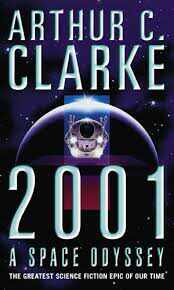
2001: A Space Odyssey – Arthur C. Clarke

2001: A Space Odyssey

I have never seen 2001: A Space Odyssey. So when my favourite pop culture website (http://www.cracked.com/article_19138_7-hotly-debated-movie-questions-that-totally-have-answers_p2.html)mentioned the movie in one of their articles, I decided to take the book for a spin.


The first thing one should know, is that the book 2001: A Space Odyssey, was written and published in 1969, subsequent to the movie, which was released in 1968. In past experience, this is nearly always a warning sign as to the quality of the novel (the novel Gladiator, for instance, was simply the movie with a few deleted scenes added in, and some fairly pedestrian descriptions tacked on. Ditto for The Ghost and The Darkness).

Unfortunately, 2001: A Space Odyssey was no exception to the rule (if you can recommend any books which are, please let me know). I am still keen to see the movie, because I think that some of the pacing and events were probably framed with the visual medium in mind, but I cannot recommend the book at all. Which makes me feel a little bad, seeing as it was written by Arthur C. Clarke, a renowned Sci-Fi author, amongst other things. The writing felt not only formulaic (possibly due to many post-2001 imitations which I encountered in advance of the original), but also dense, the narrative failing to flow.


One interesting idea expressed was that HAL malfunctioned in the violent way that it did, because its construction and intelligence development had left it unable to practice deception. The burden of knowing the ship’s true mission, and knowing that its human companions were completely ignorant, caused HAL to experience a cascading series of malfunctions in its programming, culminating in its’ attempt to sever all contact with Earth and kill the crew-members.


K.L gives 2001: A Space Odyssey 0 out of 5 homicidal robots unable to deal with deception.

The Witch Sea – Sarah Diemer

The Witch Sea

A lesbian short story, about a young woman tasked by her mother and grandmother with keeping an ancient and malevolant sea god chained on land, to prevent him from destroying humanity.

The sea god keeps sending emissaries to plead for his freedom, sea creatures who have been transformed into humans. Once an animal breaches the barrier between him and the ocean, it is transformed into a human being to keep him company in exile. Each night, they make their way to the edge of the bay, and stare out longingly at the ocean that Meriel and her maternal line have denied them.
Eventually the protagonist, Meriel, falls in love with one of the emissaries, a shapeshifted seal named Nor, and questions her role in imprisoning the god and his minions, who suffer continually because of her actions.

Ultimately, it failed to attract and maintain enthusiasm I felt for the premise. I felt like the backstory could have been fleshed out more fully; that it did not, lost The Witch Sea an opportunity to develop interest and depth. There were large logical holes – if the witches were so powerful as to deny a god his freedom, why were they living in poverty and solitude in a lighthouse on a tiny island? Surely they could think of better things to do? As the only human around, constantly casting magic to keep the god chained, where did Meriel obtain food and necessities?

K.L gives The Witch Sea 1 out of 5 fish trapped in bowls.


SPOILER ALERT! DANGEROUS WORDS AHEAD!

Meriel eventually sets the sea god free, watching her love transform and leave her forever. The lack of structure to the tale makes me wonder: what does she do next? There is no future hinted at here, and no future direction provided without the context of a town full of imprisoned people.

The Storyteller – Jodi Picoult

The Storyteller

Picoult specialises in moral dilemmas, which can at times become irksomely repetitive (every book has another life-challenging question that characters must address and act upon).
The Storyteller, however, tweaked my interest by involving two things:
1. Euthanasia, and
2. Nazi war criminals

Being a fan of books and movies like The Boys from Brazil and Apt Pupil, I jumped wholeheartedly into The Storyteller, and was rewarded with vivid characters well expressed. I enjoyed it, and the realism that throbbed in every word.
One unfortunate occurrence is that Picoult seems to be deviating down the path of many modern Dean Koontz novels, and trying (it seems) a little too hard to create quirky, “fiction stranger than truth” type characters. Each one is just a little too individual, from the ex-nun who has visions of God and has established a spiritual haven for day-trippers, to the barista who speaks only in Haiku, and the Department of Justice representative who only listens to 8-track music, and appears partially stuck in the 1950’s.
The novel progressed with pace, aplomb and riveting interesting maintained by the stories-within-stories which were featured. An enjoyable, easy read.

K.L gives The Storyteller 4 out of 5 war criminal arrest warrants.

SPOILER ALERT! DANGEROUS WORDS AHEAD!

Ultimately however, I had an ethical objection to the main character Sage’s actions. She managed to turn an ethical and legal issue, that of the right to die, into an act of revenge.
I hesitate to say petty revenge, as it was a Nazi war criminal, but—no, it was petty, and personal, which robbed the novel of the entire objective it had been building towards: trying to get Jacob to incriminate himself enough for extradition and trial.